
Outback evidence guide

Outback data corrections policy

Best casinos available in AustraliaUpdated 7 November 2026

#1Top pick

WinCrown · Welcome bonus200 free spins on selected slots

Reviews (9,827)

4.9Rating

Play nowVisit WinCrown

How disputed Outback ownership, licence, location and travel facts will be assessed and recorded once a monitored correction channel exists.

01

Evidence required

A useful correction identifies the affected URL and field, explains the issue and supplies an authoritative or primary source.

02

What happens after a correction

A confirmed material change keeps a dated note, so a reader can see when a field last moved and on what basis.
Inland verification card · editorial and evidence page

Test the record before adding kilometres

Remote and inland planning punishes assumptions. A venue name may survive online long after ownership, access, hours or the underlying service has changed, so this page places verification ahead of distance.

Outback data corrections policy: the working question

The strongest evidence answers two separate questions: does the entity exist, and can a visitor realistically use the information now? We preserve that distinction throughout the inland directory.

The page should identify the source class, check date, inclusion rule and correction path. That lets a second reviewer understand why a claim was kept, qualified or removed.

The route key for this page is corrections-policy. It identifies the editorial scope; it is not a claim that every named place has the same rules, facilities or operating conditions.

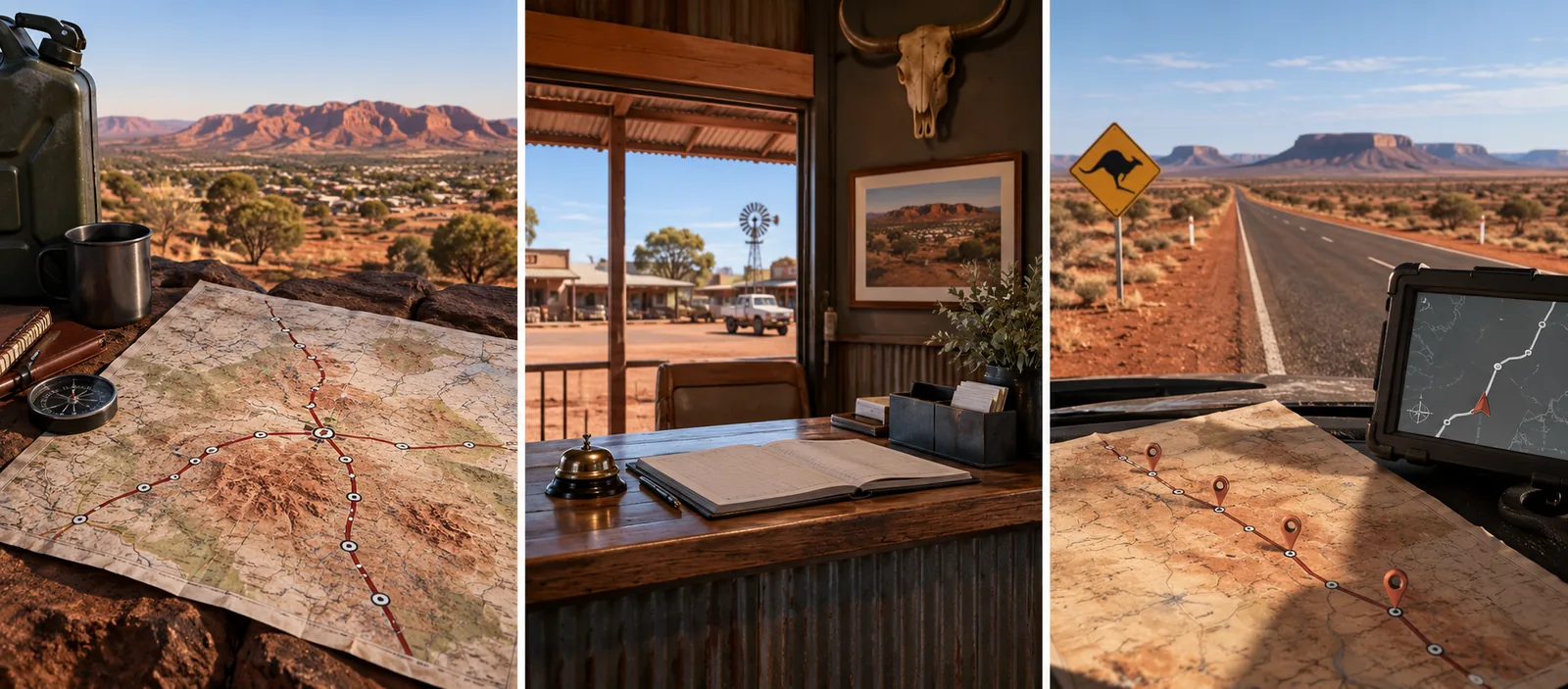
Regional route-planning artwork for inland and remote Western Australia
Locate the scopeThe first panel frames “Outback data corrections policy” inside inland Australia; it is an editorial illustration, not a live venue map.
Regional route-planning artwork for inland and remote Western Australia
Test the journeyThe route panel prompts a same-day transport and access check for Outback data corrections policy; it does not provide turn-by-turn navigation.
Regional route-planning artwork for inland and remote Western Australia
Audit the claimThe evidence panel shows the review process for Outback data corrections policy.

01 / Identify

Define exactly what “Outback data corrections policy” covers

Start with the page title, locality and jurisdiction rather than a broad keyword. Record whether the reader is trying to understand a rule, compare an area, inspect one venue record or plan a route. A precise question prevents unrelated facts from being combined into a confident but unusable answer.

02 / Verify

Prefer the source closest to the claim

Regulators and legislation support legal statements; an operator supports current hours and facilities; transport agencies support network information. Third-party directories can reveal a lead, but they do not settle a conflict. When sources disagree, show the uncertainty and the date instead of choosing the most convenient version.

03 / Recheck

Make the plan resilient to change

Before committing fuel and time, check the official record, contact the venue through an independent channel and compare the route with a practical alternative. Recheck time-sensitive details shortly before departure and keep a practical alternative. This is especially important for holiday hours, regional services, construction, accessibility arrangements and any listing that depends on a single uncorroborated source.

Compact comparison

What belongs in the decision

Place
Exact locality, jurisdiction and geographic boundary.
Evidence
Primary source, independent cross-check and review date.
Access
Route, operating window, parking, transit and accessibility.
Limits
What is unknown, time-sensitive or outside this page’s scope.

Questions to answer before relying on this page

Is the information current enough for a visit?

Use the review date as a prompt, not a guarantee. Recheck dynamic details with the venue, regulator or transport operator that controls them.

Do the illustrations show real venues?

No. They are purpose-made editorial scenes used to explain location, route and verification. They do not depict a confirmed venue, available machine or guaranteed facility.

What should be reported as a correction?

Send the page address, the disputed statement and a source that can be checked. Ownership, licence status, closure, address and access changes are prioritised because they materially affect a reader’s decision.